
Heat Recovery Ventilation in Toms River, NJ
Fresh, filtered air all year without wasting the heat you paid for. HCS installs and services heat recovery ventilators for homes and businesses throughout New Jersey from our base in Toms River, as we have since 1998.
Serving New Jersey
Since 1998
State-Licensed
HVAC Contractor
Dependable Service
Customer Approved
Toms River
Ocean County, NJ
Homes that are sealed tight to save energy can trap stale air, odors, and moisture. Opening a window lets in fresh air, but it also lets out the heat you paid for. A heat recovery ventilator, or HRV, swaps stale indoor air for fresh outdoor air and keeps much of the heat. It runs quietly in the background all year.
How It Works
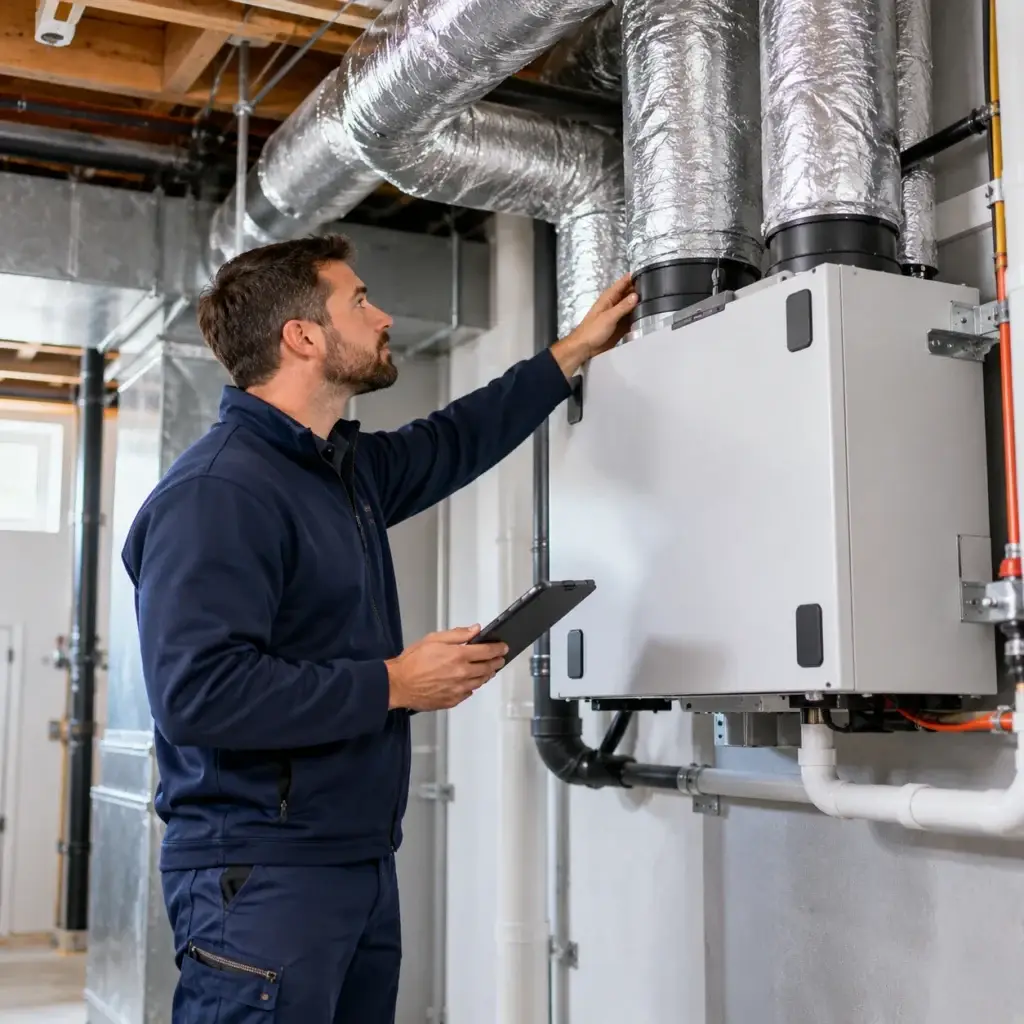
An HRV has two fans and a heat exchanger core. One fan pulls stale air from kitchens, bathrooms and living areas, and the other brings in fresh outdoor air. The two airstreams pass each other through the core without mixing, and the outgoing warm air heats the incoming cold air. Fresh, filtered, pre-warmed air is then delivered to your rooms.
Why Install a Heat Recovery Ventilator?
Fresh Air All Year
A steady supply of outdoor air, even when windows stay closed all winter.
Saves Heating Energy
Recovers much of the heat from outgoing air, so fresh air doesn't drive up your bills.
Controls Moisture
Helps clear excess humidity that leads to window condensation, mold and musty odors.
Fewer Odors
Clears cooking odors, pet smells, and fumes from cleaning products.
Filtered Supply Air
Incoming air passes through filters that help capture pollen and dust.
Quiet, Balanced Airflow
Runs quietly in the background and balances the air coming in and going out.
Is an HRV Right for Your Home?
An HRV is a smart choice if your home:
- Is new construction or a major renovation built to tight energy codes
- Has been air-sealed or re-insulated
- Has condensation on windows in winter, or musty, stuffy rooms
- Has lingering cooking, pet or other odors
- Is closed up for long stretches in winter
- Has a finished basement, home gym or home office that feels stale

| Comparison | HRV (Heat Recovery Ventilator) | ERV (Energy Recovery Ventilator) |
|---|---|---|
| Recovers | Heat | Heat and some moisture |
| Winter effect | Exhausts excess indoor moisture | Keeps more moisture indoors |
| Summer effect | Brings in outdoor humidity | Limits humidity coming in |
| Best for | Homes with too much winter moisture or condensation | Homes that feel dry in winter or humid in summer |
Not sure which you need? We’ll look at your home’s size, layout and humidity levels and recommend the right system.
Complete Heat Recovery Ventilation Services
HRV Installation
HRV Replacement
HRV Repair
HRV Maintenance & Tune-Ups
Signs Your Home Needs Better Ventilation
Condensation or frost on the inside of windows in winter
Musty smells, or mold or mildew in bathrooms, closets or basements
Cooking and pet odors that linger for hours
Rooms that feel stuffy by the afternoon
A damp, closed-in feel in winter
An existing HRV that's noisy, frozen or not moving air
Noticing any of these? Call (732) 557-9220, and we’ll help you breathe easier.
Why New Jersey Trusts HCS With Ventilation
Serving New Jersey Since 1998
We've been keeping Jersey Shore homes comfortable since 1998. We know the area's homes, systems and salt air.
Custom Ductwork In-House
Our sheet metal shop builds the ducts an HRV needs for quiet, balanced airflow.
Whole-Home Approach
We design ventilation to work with your heating, cooling and humidity control.
Honest Pricing
Clear options and an upfront price, with no pressure and no surprises.
Heat Recovery Ventilation FAQs
Here are answers to the questions New Jersey homeowners ask us most. Need something else? Just give us a call — we’re happy to help.
What's the difference between an HRV and an exhaust fan?
- An exhaust fan only removes air, and the replacement air leaks in through cracks, unfiltered and cold.
- An HRV brings in fresh, filtered air and recovers heat from the outgoing air, so you get balanced ventilation without the energy loss.
Will an HRV raise my energy bills?
- An HRV uses a small amount of electricity to run its fans.
- Because it recovers much of the heat from outgoing air, it costs far less to run than ventilating by opening windows.
Can an HRV connect to my existing ductwork?
Often, yes.
- An HRV can tie into your forced air system or run on its own dedicated ducts.
- Homes with boilers or ductless systems usually get dedicated HRV ductwork.
Does an HRV work in summer?
Yes.
- It keeps fresh air moving year-round.
- In humid weather, an ERV may be a better choice because it limits the moisture coming in.
How long does an HRV last?
With regular filter changes and yearly maintenance, most HRVs last 15 to 20 years.
Ready to Get Comfortable?
Call us for repairs, tune-ups, or a quote on a new system.
Call Us
(732) 557-9220